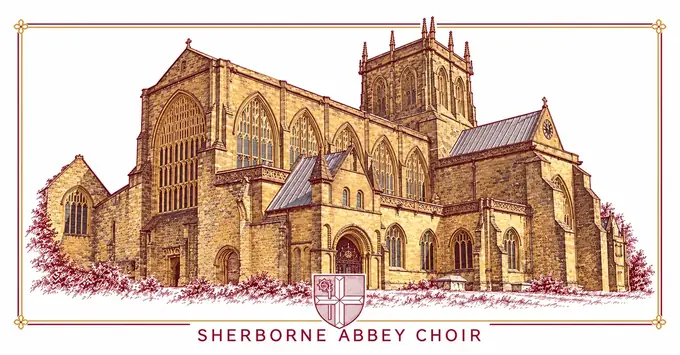
Love that repairs and reconciles
The choir returned with a programme stretching from Renaissance Rome and Tudor England to Stanford’s grand Victorian inheritance—and with three very different organ voices along the way.
This Week in the Church’s Year
Love that repairs and reconciles
Today is the Fourteenth Sunday after Trinity. In Romans 13.8–14, Paul says that love of neighbour fulfils the law and calls Christians to put on the Lord Jesus Christ. In Matthew 18.15–20, Jesus describes the careful work of addressing harm and seeking to restore a brother or sister; the passage ends with the promise of his presence when two or three gather in his name. Together, the readings join love, honest conversation and the hope of a community made whole.

Rubens places the brothers’ embrace at the centre and fills the edges with family and attendants. The National Galleries of Scotland describes this lively oil sketch as a model for a larger painting; its sweeping gestures make the reunion clear at a glance. The story comes from Genesis 33 rather than this Sunday’s Gospel, but it offers a visual companion to Jesus’s call to seek a brother or sister and Paul’s command to love a neighbour.
Read the Sunday readings in full (World English Bible British Edition):
Sources: Church of England Common Worship lectionary · National Galleries of Scotland artwork record · Wikimedia Commons image · eBible.org, World English Bible British Edition.
 Portrait, c.1894: anonymous; public domain via Wikimedia Commons |
Composer of the Week Sir Charles Villiers StanfordCharles Villiers Stanford (1852–1924) grew up in a prosperous and intensely musical Dublin household, then studied at Cambridge and in Leipzig and Berlin. Still an undergraduate, he became organist of Trinity College. He later served as a founding professor of the Royal College of Music and Professor of Music at Cambridge, teaching a formidable generation that included Vaughan Williams, Holst, Ireland, Bridge and Coleridge-Taylor. Stanford could be exacting, impatient and magnificently combative; his pupils did not always enjoy the thunder, but they remembered the discipline. He wrote operas, seven symphonies, chamber music and songs, yet his Anglican church music has proved the most durable part of his legacy. This week’s two works reveal its range: the Canticles in C have ceremonial breadth and a confident organ part, while Justorum animae achieves its effect without accompaniment, holding grief and consolation in a remarkably small space. |
Musical Margins Clues from this week’s scoresThings to notice with your eyes—and then hear with your ears. | |||
|
| ||
|
| ||
|
| ||
Open a listening player below and follow the Abbey choir copy. Organ-score resources are provided where available. Follow James’s guidance on breathing, pronunciation and interpretation.
9.30am Sung Eucharist
Giovanni Pierluigi da Palestrina — Missa Brevis
Palestrina’s sixteenth-century Mass shows how independent vocal lines can remain poised and lucid. Listen for imitation passing between the parts and the arrival points where the texture settles.
Listen: The Tallis Scholars
William Byrd — Ave verum corpus
Published in 1605, this intimate Catholic motet greets Christ’s body in the Eucharist. Listen for the expressive suspensions: one voice clings to a note while the harmony changes beneath it.
Listen: The Sixteen
Thomas Morley — Nolo mortem peccatoris
The Latin text says that God does not desire the sinner’s death, but that he should turn and live. Morley balances penitence with reassurance.
Listen
Thomas Tallis — If ye love me
This English anthem sets Christ’s promise of the Comforter from St John’s Gospel. Its direct, syllabic opening grows into gentle imitation without sacrificing clarity.
Listen: The King’s Singers
J. S. Bach — Fantasia in G major, BWV 572
Also called the Pièce d’Orgue, this organ work moves through three sharply contrasted sections. The vast central paragraph sounds as though Bach is building an Abbey out of harmony.
Watch: Netherlands Bach Society
View/print the score
Under Revised Version, choose the 1891 Bach-Gesellschaft organ score, edited by Ernst Naumann, rather than an instrumental arrangement.
Hymns — 436, 457 (ii), 351, 478
Use the Abbey hymnbook and rehearsal markings for the advertised versions.
6.00pm Choral Evensong
Edward Bairstow — I sat down under his shadow
A tender setting of words from the Song of Songs. Its lilting 6/8 should flow in two broad beats rather than six nervous ones.
Listen
William Smith — Preces and Responses
Smith was a seventeenth-century Durham musician. These compact exchanges turn the words of Evening Prayer into musical conversation between priest and choir.
Listen
Psalm 32 — chant by Woods
The psalm moves from the weight of hidden wrongdoing to the relief of forgiveness. Follow the pointing and chant in the Abbey choir copy.
Charles Villiers Stanford — Magnificat and Nunc dimittis in C, Op.115
Mary’s song of praise and Simeon’s farewell form the paired Evensong canticles. Compare the Magnificat’s outward confidence with the Nunc dimittis’s gathering calm.
Listen to both canticles
Charles Villiers Stanford — Justorum animae, Op.38 No.1
“The souls of the righteous are in the hand of God.” Stanford’s unaccompanied motet surrounds a troubled centre with music of extraordinary serenity.
Listen: The Cambridge Singers
Gordon Phillips — Miniature No.1
A miniature is a complete musical thought on a small scale. Listen for economy: how an organist establishes colour, movement and an ending without the dimensions of a grand voluntary.
Listen
No suitable free score or score-following video could be verified for this organ miniature.
Hymns — 366, 285 (i)
Use the Abbey hymnbook and the Director of Music’s guidance.
Programme source: Sherborne Abbey September 2026 music list. Performances are listening examples by other musicians; follow the Abbey choir copies for editions and markings.
Chorister’s Challenge
A genuine 16 × 16 crossword using this week’s music.
| 1 | 2 | ||||||||||||||
| 3 | |||||||||||||||
| 4 | 5 | 6 | |||||||||||||
| 7 | |||||||||||||||
| 8 | |||||||||||||||
| 9 | 10 | ||||||||||||||
| 11 | 12 | ||||||||||||||
| 13 | |||||||||||||||
| 14 | |||||||||||||||
| 15 | |||||||||||||||
| 16 | |||||||||||||||
| 17 |
Across
| Down
|
Answer sheet
| 1A | N | I | 2M | A | E | ||||||||||
| 3T | O | ||||||||||||||
| 4S | 5A | V | 6E | V | E | R | U | M | |||||||
| T | 7S | L | U | L | |||||||||||
| A | M | L | C | E | |||||||||||
| N | I | I | H | Y | |||||||||||
| 8F | A | N | T | A | S | I | A | ||||||||
| O | H | R | 9B | A | 10C | H | |||||||||
| R | 11B | I | Y | A | 12B | ||||||||||
| D | 13P | A | L | E | S | T | R | I | N | A | R | ||||
| I | T | D | T | E | |||||||||||
| 14J | U | S | T | O | R | U | M | I | V | ||||||
| S | C | I | |||||||||||||
| T | 15P | H | I | L | L | I | P | S | |||||||
| 16E | V | E | N | S | O | N | G | E | |||||||
| W | 17M | I | S | S | A |
Happy singing!